The Hügelkultur Garden: Growing Abundance from Wood, Soil, and Time
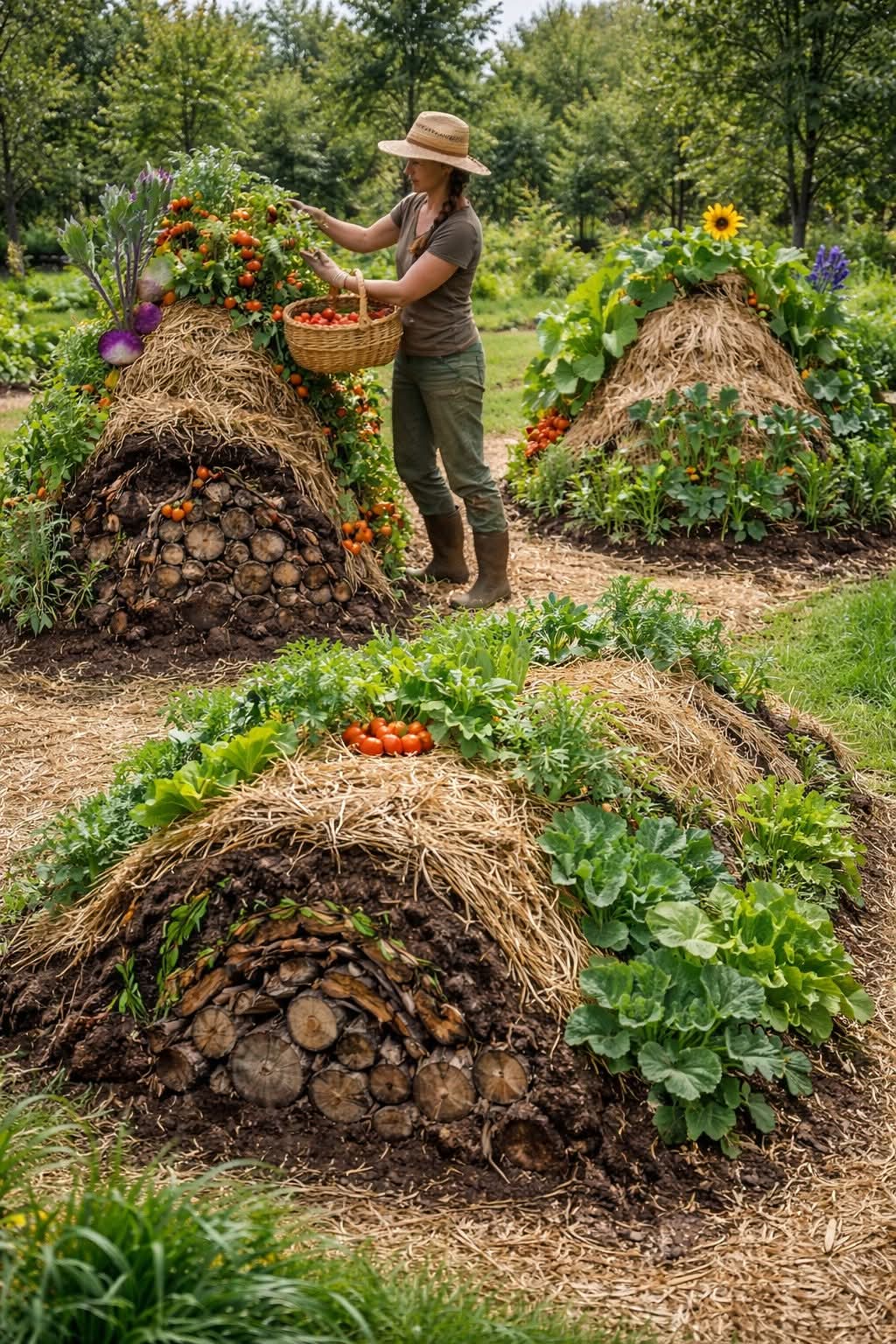
The image above showcases a powerful and ancient gardening technique known as Hügelkultur—a raised-bed method rooted in permaculture and natural forest systems.
At first glance, these straw-covered mounds may look simple, but beneath the surface lies a highly productive, self-sustaining growing system designed to work with nature rather than against it.
What Is Hügelkultur?
Hügelkultur, a German term meaning “mound culture,” is a method of building raised garden beds using decomposing wood as the foundation. Logs, branches, and woody debris are layered with organic matter, soil, and straw, forming a mound that slowly transforms into rich, fertile growing ground over many years.
As the wood breaks down, it acts like a sponge—absorbing water, releasing nutrients, and creating ideal conditions for plant roots.
Built from the Ground Up
The images show different stages and styles of Hügelkultur construction. Large logs form the core, stacked carefully to create structure and airflow.
These are covered with smaller branches, compost, soil, and finally a thick layer of straw mulch.
This outer layer protects the mound from erosion, retains moisture, and encourages beneficial soil life.
Some mounds are tall and steep, while others are long and low, adapted to the landscape and planting needs. Both forms demonstrate how flexible and scalable this method can be.
A Living, Breathing Garden Bed
What makes Hügelkultur remarkable is that the bed improves with time.
As the wood decomposes, it feeds fungi, microbes, and earthworms, creating a thriving underground ecosystem.
Plants grown on these mounds—vegetables, herbs, squash, tomatoes, and leafy greens—benefit from steady moisture and nutrient release.
The result is vigorous growth with reduced need for watering, fertilizers, or soil amendments.
Water Efficiency and Climate Resilience
One of the most valuable advantages of Hügelkultur is water retention.
In dry climates or during hot summers, the buried wood stores rainfall and slowly releases it to plant roots.
In wet climates, the raised structure improves drainage and prevents waterlogging.
This makes Hügelkultur beds especially resilient to climate extremes and ideal for sustainable, low-input gardening.
Harvesting from a Regenerative System
The image of a gardener harvesting fresh vegetables from the mound highlights the reward of this method. Hügelkultur is not just about growing food—it’s about regenerating soil, recycling natural materials, and building long-term fertility.
What begins as fallen trees and garden waste becomes a living pantry, producing food season after season.
A Return to Natural Wisdom
Hügelkultur mirrors how forests grow: fallen trees decompose, feed the soil, and support new life. By copying this natural process, gardeners create systems that are productive, resilient, and deeply connected to the land.
Conclusion
The Hügelkultur garden is a testament to patience and ecological wisdom.
It transforms wood and organic matter into abundance, reduces labor over time, and nurtures both plants and soil.
For gardeners seeking sustainability, resilience, and a closer relationship with nature, Hügelkultur offers a timeless solution.
#fblifestyle


No comments:
Post a Comment